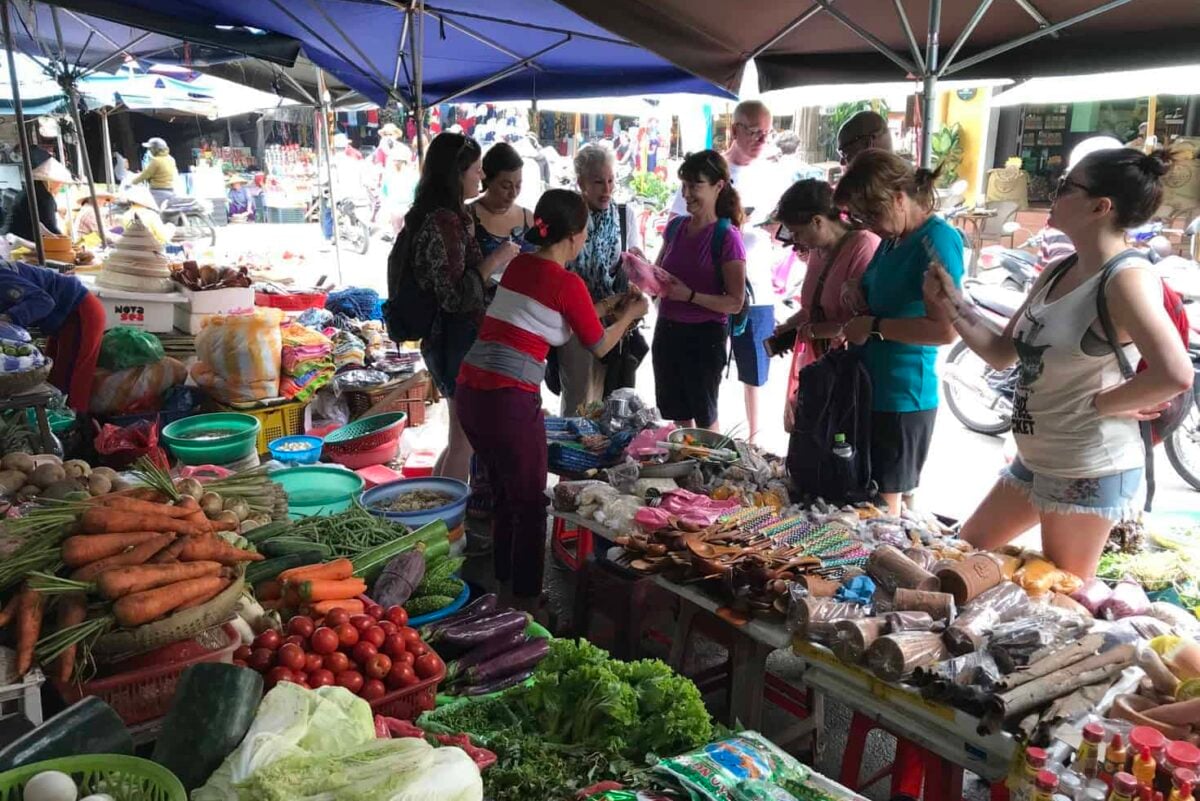
For anyone who’s paid to enter an attraction in Southeast Asia, you may have noticed that there are often two different prices: one for tourists and one for locals. This happens across the region and at all sorts of places including, national parks, museums, historic sites and religious monuments.
The difference in cost can be significant and some tourists have recently complained about the unfairness of dual pricing. At national parks in Thailand, for example, foreigners pay five times the price locals are charged to enter (e.g. 200THB compared to 40THB). Another often-cited example is Lion Rock (Sigiriya) in Sri Lanka, where foreigners are charged $35 USD. This compares to just 120 LKR (approx. $0.40 USD) charged to locals. In Cambodia, a one-day ticket for the Temples of Angkor is $37 USD for tourists, whereas Cambodians can visit the temples for free.
We wanted to know how you felt about this; does it annoy you or do you think it’s fair? This is what you had to say…
Related: (opens in new tab)
- 💲 Cost of Backpacking Southeast Asia
- 🪣 The Best Things to Do in Southeast Asia
- 💰 Cheapest Countries to Travel in Asia
Attraction Prices in Southeast Asia: Should Foreigners Pay More than Locals?
The Results: Yes! ✅ Tourists should pay more than locals. 👍
There was an overwhelmingly positive response, with around 87% of you saying that foreigners should pay more than locals to visit attractions.
Around 50% of those respondents who voted yes said that they believed it’s okay to charge tourists more as long as prices remain relative, affordable and fair to everyone.
Check out the comments below! 👇
YES to Dual Pricing: It’s Fair for Foreigners to Pay More 🙂
It’s fair to say that most of you are happy to pay more to visit attractions than locals are charged. Many argued that as tourists (and often Westerners) we are privileged to be able to travel in the first place and that we should help to pay towards the costs of looking after the places that we visit. With local incomes being low compared with visitors’, many said the pricing was fair and relative.
“I think it’s totally fair!” James Steane
Top Comment: ⭐ “[It’s] never been an issue for me; don’t see why not. I think it’s a great idea to be honest and should be taken up in a lot more countries. You still want locals to put into the economy, but you also don’t want to price them out of the ability to do it. Also it’s all relative. I probably earn 4x (if not more) than what a local does. So even if their local price is a quarter of mine, it’s relative.” Jonathan Mills
“When you account for differences in income it probably works out to be comparable as a percentage of income. Just because the local price seems ‘cheap’ to me doesn’t mean it’s actually cheap in that local economy to the people that live there.” Jaimee Smith

“[I think] fair enough, because if you cant afford [it] then you shouldn’t visit. Also, if they use the money to keep the park in good shape then why not?” Gary Looi CW
“[Yes.] Several reasons here… locals pay taxes, locals contribute to the community that they live in, locals care for and appreciate and love their special spaces. Often locals aren’t even able to appreciate their attractions due to the tourists (said as someone who lives in Amsterdam, that has gotten unbearably crowded pretty much year-round now…) Tourists can appreciate these sites, but not necessarily in the same way, and are often responsible for a lot of bad behaviour that locals have to put up with (littering, drinking, etc.).” Anonymous
Unique Perspective: 👉 “Locals usually don’t make anywhere near as much as tourists, be that a budget backpacker or someone in a luxury hotel, either way you’ve got enough money to buy flights and hostels etc. Making their attractions affordable for them is definitely reasonable. I see it as the price tourists pay is the standard and then locals get a large discount due to lower wages and the fact that it’s their country. Rather than seeing it as tourists pay way more than the standard. Having said that a lot of locals in Thailand were actually quite shocked to know how much more I was paying as a tourist but I still think it’s fair.” Livvy Spillets
“We Westerner folks have more money to spend than locals. Things we like to see (temples and historical parks for instance) need maintenance. I don’t mind paying a bit more if it offers me the possibility to see things in their full glory. So a reasonable extra price is no problem to me.” Anonymous

NO to Dual Pricing: Prices Should be the Same for Locals and Foreigners 😠
Interestingly, there were very few respondents who said they thought the different pricing was unfair. One person replied anonymously to say that foreigners shouldn’t pay more than locals. Another posted on Facebook that it was unfair, but the comment was deleted soon after — perhaps they changed their mind!
“[It makes me] annoyed, in Canada any tourist can see a natural attraction for free, even those that are conservation protected.” Aysha Dulisse
Dual Pricing – It Depends: Balanced Opinions 🤔
Several people said that while they don’t have a problem paying more than locals, they thought there should be some kind of cap or regulation to make it fair to everyone.
“It must be fairly priced, maximum double.” Ashit Roy
“It’s fine as long as I pay less in my country…” Beniamin Perek

“When visiting Koh Samet in Thailand, we would often circumvent paying the Marine Park entry fee (5 times higher than locals paid) by walking the beach to avoid the entrance gate. No longer possible because all arrivals now pay at the dock as soon as they disembark. Bottom line: Just because I can afford an air ticket to Thailand does not mean I’m rich and not restrained by a budget.” Earl budget traveller from Ketchikan, Alaska.
Top Comment: ⭐“If there is a prosperity gap between the typical tourist vs the locals then there absolutely should be different prices for tourists vs locals, otherwise the only people who would be able to enjoy the local attractions would be tourists. It would be less available to the locals and it’s their home/culture/etc.” Melissa G
“I don’t actually have much of an issue with this, I just wish there was a single rule set out across the entire planet. If I have to pay more to visit somewhere massive – The Galapagos Islands (I’m aware not SEA 🤣) stand out for this where as a tourist, you’re paying way more than Ecuadorians – I don’t really have an issue. But for smaller attractions like museums or galleries, it can get pretty expensive as a backpacker – especially if you’re on a budget. There’s a fine line between sharing your culture with the world and profiting from it. But it’s tough, because in lots of countries where backpackers are common, the cost of living is low and locals don’t have the same amount of money, so without tourism boosting revenue, locals might not be able to experience their [own] culture in the same way.” Tim Ashdown

“I find there are at least two types of travellers in general. The ones on a 2/3 week trip who money is not a problem and backpackers who are traveling many months and money is tighter. I do not mind paying slightly more than locals but do object to paying 5 times or more the price locals pay. I read of countries that are trying to stop backpackers and only want well-off travellers. What then happens to hostels and the locals who cater for the backpackers, will they lose there jobs?” Daryl Tooth
What are your thoughts on dual pricing? Let us know in the comments!

Lisa Barham
Having always dreamt of travelling the world, Lisa finally decided to follow that dream in her mid-thirties when she left her nine-to-five in London for life on the road. After trekking to Everest Base Camp in Nepal and learning to surf in Sri Lanka, she headed for wondrous Southeast Asia, where she can currently be found solo backpacking, navigating through life and unfamiliar streets.
Follow her on: Instagram